

Feeling invisible? You might be missing Attunement
Closing the distance between being loved, and being seen

There is a particular kind of lostness that has nothing to do with geography. It’s the experience of being so submerged in our own internal weather that we cannot quite locate ourselves inside it. Big feelings arrive and instead of being able to name them, move through them, or ask for what we might need, sometimes… we just spin like a sad little lone sock in the washing machine, waiting for the cycle to end.
What changes everything in moments of lostness is not advice. It’s not solutions. Not even love, necessarily. It’s someone (or something: a song maybe?) naming what is happening inside us before we have found the words for it ourselves. Someone who reads the spin, recognises it, and reflects it back clearly enough that suddenly we can see it too.
That is attunement.
And once it’s been experienced, like reeeeeally experienced, we might start to notice when it’s missing.

Understanding Attunement
Attunement is the act of bringing ourselves into harmony with another. [source]
In relational terms, attuning to someone is equivalent to accurately sensing – through listening and recognition – and adjusting your response to meet them there in harmony.
Attunement moves in two directions: toward others, which we call other-attunement, and toward ourselves, which we call self-attunement. This article is primarily concerned with the first, but the second makes the first possible.
When another person attunes to us, there are often three simultaneous things cooking together in the cauldron:
Perception
When we’re really connecting to someone’s current state, we tend to pick up external cues of what the other person might be experiencing internally. We may be able to identify the intention behind their tone, micro-shifts, body language, and emotional shifts in the ways they interact, all of which help us really see through their behaviour in a way that others might miss.
To exemplify, perhaps, in a lighthearted connective conversation, someone we deeply care about has gone awfully quiet. With the silence brimming, it’s now up to us to respond to them in order to bring the conversation back to connection.
Interpretation
As we process their external cues, we might find a deeper understanding of the state of their silence and how it shows up in them specifically. This understanding sharpens overtime and across contexts. The more time we might have spent witnessing this someone in different situations, the more accurately we can read what this particular shift, in this case silence, means for them.
Maybe they have been feeling offended by something we said, or perhaps they are suddenly reminded of someone close to them who is no longer in their lives. The context we carry for their current and past or shared experiences in our memory will help us relate to them with curiosity rather than confusion.
Response
Knowing why someone has gone quiet has a direct impact on how we respond to their silence. If they are silent because they are angered by us, we would know that they might need us to hold space for them to express that anger or rather, knowing who they are, need us to give them some space to process on their own without us being pushy about it.
If they seem overwhelmed, we might use a softer voice to approach them. if they seem guarded, we might approach them with curiosity rather than solutions. If they seem to be flooded with emotions, they might need a hug or rather some space and time instead.

But what does that actually look like when someone reads us accurately enough to hand us back to ourselves?
It is rarely one gesture or one perfectly chosen word. It is several things happening at once, often invisibly, often without either person fully registering the effort involved.
The Attunement Tiramisu
Attunement is layered, kind of like a good tiramisu with the right amount of complexity in flavour. And just like a good tiramisu, the order of the layers matters. You can’t pour the espresso after the cream has set and expect the same result.
When we attune to another person, we’re doing several things at once across three distinct levels: emotional, somatic, and cognitive. They’re part of the same whole but distinct enough to notice when a layer is missing. Let’s take a look at how they mingle together.
Emotional attunement
Emotions are data. Feelings are not facts but they are true. Though we know this intellectually, it’s easy to forget when emotions rampage our system, flooding us with an indescribable sense of overwhelm, and suddenly the knowing doesn’t help much at all.
When someone attunes to our emotions, they can soften the blow by simply recognizing the impact the emotion is having on us rather than intending to resolve it.
“Hey, I didn’t mean it like that. You don’t need to feel small.”
Okay… but I do feel small????
For instance, when we feel small, if our companion responds with curiosity about that smallness rather than resolution, it leaves us feeling held and validated in our experience. The difference between “you don’t need to feel small” and “tell me about feeling small” is enormous, even when both are offered with care.
Emotions enjoy being seen and recognized, not made to go away. When we try to fix the problem or reason with an emotion into resolution, we tend to find it growing larger as though it is trying harder to be heard.
When someone emotionally attunes to us, they might do so by mirroring back the emotion we’re experiencing, which inevitably enables our minds to recognize it in them even if we haven’t yet been able to name it ourselves.
These emotions we experience don't just exist in the mind. They live in the body first. Some of our bigger feelings can come with a tightened chest, shallow breath, the body closing inward before we've even found the words for what we're feeling. Which is why emotional attunement alone is sometimes not enough. Someone can hold our feelings with care and still miss what our body is asking for.
Somatic attunement
Somatic attunement is when someone reads our physical state and responds to it directly. When someone interprets our internal state correctly, they may respond to us by matching the tone and pace of our voice, slowing down if we’re overwhelmed, offering stillness if we’re closing inward, or creating space if we’re contracting.
Needing touch (or the lack of touch) to regulate when things don’t make sense is a trick as mammalian as it gets. When a friend cries, we don’t open with analysis. We offer a hug. We breathe together. We help them feel held inside the emotion before we do anything else with it. When done right, we can appropriately shift our companion back into connection with themselves through connection with us.
Meeting someone at the level of the body is the most foundational form of attunement. Everything else builds on whether this layer was met first.
Cognitive attunement
Once the nervous system settles, and there is space for emotions to flow through the body, meaning-making becomes easier. This is where cognitive attunement lives.
Cognitive attunement is perhaps the most complex and intimate form of attunement. This is when someone understands the story, the context, and the significance behind our feelings and not just what we’re experiencing, but why it matters to us specifically.
“When you joke about eating the last pickle, it hurts me.”
“Hmm… is it because it makes you feel like I will never consider your preferences over mine?”
Being met in a moment of vulnerable expression builds a deeper bond because they are witnessing us not just right now but across time, having registered details about us that add up to an elaborate understanding of our experience of life which is separate from their own.
When someone does this for us, it feels like they have tracked the inner logic of our experience. And that is a rare and particular kind of being known.

It seems like a lot of work to do the work of noticing all the details in another human… why would we even do this?
When someone attunes to us consistently and accurately, in the immediate moment, our nervous system finds a partner in the processing. This is co-regulation. Over time, being witnessed accurately builds a sense that there is room for us, that we belong. And belonging, confirmed repeatedly, forms into a bond, a relationship that stabilises rather than depletes.
These three consequent experiences of being attuned to are sequential. Each one makes the next possible.
Co-regulation
݁ . ݁₊ ♡⊹♡ . ݁˖ .
When we are struggling, many of us retreat into a cavern of our own suffering. The chaos of our internal world begins to feel like a burden we want to shelter our loved ones from. So we attempt to resolve our chaos alone. And yet there is something that happens when a trusted person makes us feel safe enough to express ourselves and reflects the chaos back at us, gently, sometimes simply through holding a safe container within which to unravel.
And suddenly we can see it.
What was tangled and invisible inside us becomes external, observable, almost workable. We are better at solving problems that exist outside of ourselves. A witnessing of our internal world hands us our own experience in a form we can finally hold.
Humans are not built to process everything alone. Our mammalian instinct supports regulating our minds and bodies through each other’s presence, through being read accurately, through having our state met rather than managed. When someone attunes to us, our nervous system does not have to carry the full weight of its own distress. It finds a partner in the processing.
For those of us who grew up in environments where our signals were misread, dismissed, or treated as inconvenient, co-regulation through attunement does something more than calm the nervous system. It restores trust in it.
Receiving confirmation that our experiences are valid solidifies the belief that our human experience is real, our nervous system is not broken, we are not too much. Over time, this builds a body that feels safer expressing itself, in relationship, without masking or shrinking to make others comfortable.
Belonging
٩(ˊᗜˋ*)و
According to researchers Baumeister and Leary, the need to belong is as fundamental as the need for food, and crucially, belonging is not about the quantity of relationships but the quality of the emotional connection within them. Being consistently recognised in the state that feels most honest to us, repeatedly, is how that quality is built.
Through regularly co-regulating with someone, we begin to form a sense of belonging and safety in their company. The key difference between co-regulation and belonging is the permission to expand.
When we are accurately witnessed, and responded to by another person, overtime, we begin to feel that there is room for us here. Room to grow into our own skin as we feel inspired to by the people around us, to learn from them and offer something worth learning in return. The relationship becomes generative. Not just safe, but rather alive.
This happens because attunement validates experience in a specific sequence. Someone believes what we are going through and responds to it as real, leaving no room for us to doubt it. What was previously trapped inside us, subject to the chronic interrogation of am I overreacting, am I too much, is this even real becomes external. And once an experience exists outside the prison of our own uncertainty, we can move toward resolution. The self-doubt moves out of the way. Over time, this builds a nervous system that has accumulated evidence that the external world can be trusted to receive us. That our signals mean something. That we are not making it up.
It’s the difference between showing up at a party where we could wear our favourite dinosaur-clown costume and have people smile at us versus have people show us their favourite dinosaur-clown memes, make t-rex noises with us, and cheer us on. One tolerates us, the other meets us in our absurdity, ideally encouraging our inner weirdo to freely self express, creating an internal sense of:
“oh.. I GO here”
Bonding
⋆˚✿˖°
If belonging is the feeling, then bonding is what forms when that feeling is consistently confirmed through accumulated attunement. Bonding is somatically felt trust within a nervous system that has learned, through repeated experience, that this particular person is safe to be unmasked around. That we do not have to perform a more manageable version of ourselves in their presence.
Being known is distinct from being liked, or loved, or admired. When we like or admire someone we are often in a kind of mirror relationship with them where we respond to traits they reflect back in us, or traits we wish we had more visibility of within ourselves. There is a pull toward resonance.
But knowing is different.
Knowing is archival. It accumulates through many reps of accurate attunement, until we carry a working model of the other person inside our mental models, enough to simulate how they will respond to something as small as a gesture or a gift. Not because we are projecting our own preferences, but because we have genuinely tracked them.
Psychologist John Bowlby, whose foundational work on attachment theory reshaped how we understand human connection, found that secure attachment is built through consistent, attuned presence and gives us the capacity for emotional resilience, self-regulation, and trust. Bonding, thus, becomes the infrastructure of a functioning emotional life.
This is what deep attunement makes possible over time. Not just comfort, but a particular quality of closeness that comes from being perceived accurately, repeatedly, until our nervous system stops bracing and connection becomes the thing that stabilises us rather than the thing we have to survive.
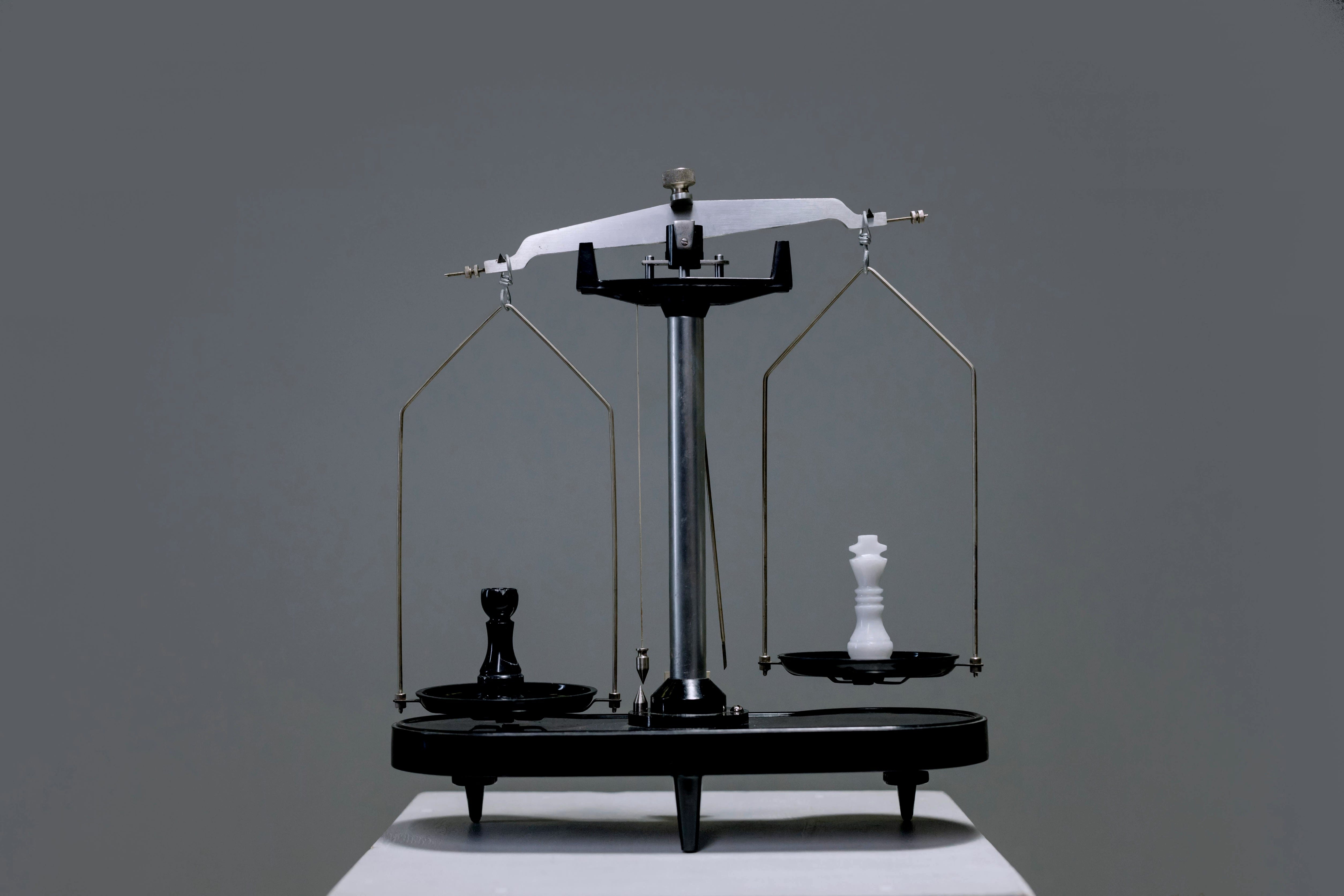
And how would you know if you’re doing the thing?
There’s attunement and then there are impostors pretending to be attunement. Our mind might trick us to believe we are truly in sync with someone’s inner world, when in truth we’re both at opposite ends of the same see-saw. One is far too high and one is far too low to meet in the middle.
The not Attunement platter
Attunement requires knowing where we end and someone else begins. Without that clarity and without a sense of our own desires, limits, and identity as separate from theirs, what looks like reaching toward someone is often just reaching toward a version of ourselves.
When someone responds to us in the following ways instead of attuning, especially in a moment of dysregulation, it feels like they’re bringing us a collection of lost socks from the washing machine when all we needed was the other sock to our favourite sock pair. There are three prominent sock-mismatches when someone is aaaalmost attuned to us but not quite:
≠ Assuming
Care without curiosity is still just a guess. Assuming is what happens when someone skips the most important step, asking or identifying what the person needs, and they go straight to response. They have taken in the information. They are trying. But they are working from their own experience of what this situation would require, their own sense of what help looks like, and they offer it with confidence and sometimes with persistence.
The intention is care. The effect is erasure.
When someone assumes what we need without confirmation and delivers it with certainty, something particular happens. We don’t just feel unmet, we feel at fault for it. The logic goes: they tried, they offered, they pushed through our resistance, and it still didn’t land. Which must mean we are difficult, broken and unable to communicate what we need clearly enough to be helped.
The loneliness of receiving assumed care feels like being stranded in a wheat field during a thunderstorm watching a friend drive over, run into the middle of the maze and hold an umbrella over the scarecrow 12 feet away from you while smiling only to say
“But you love rain, don’t you?”
Attunement asks before it offers and checks before it moves. Not because it doesn’t care, but because it cares enough to know that assuming makes an ass out of you and me. But, and, also, there’s a limit to how many times the same question can be asked before it’s just Topping from the bottom.
≠ Merging
On the other hand, the great desire for union or completion within each human being often propels us to seek a state of mutual existence that can be called merging. We merge when the distance between us collapses without outlines. It can feel like profound intimacy, like the sense that someone truly gets us, but often one person has overlaid their own experience onto the other, and is responding to their own projection rather than the actual person sitting across from them.
When someone cannot locate the boundary between their experience and ours, they default to treating our inner world as an extension of theirs. This collapse is the result of empathy without differentiation. If in a scenario, the empathiser would feel a certain kind of hurt, then in the same scenario the empathised must feel the same kind of hurt. If the empathiser would want space, then they may offer space. If they would want to talk, they might push to talk.
Attunement is not doing to another what you would want done to you, without connecting to the other person outside of your own experience. True attunement requires holding ourselves as separate individuals in relation to the other person, grounded and boundaried.
The bridge between two people only works if both sides are still standing.
≠ Defending
We all carry a story about who we are. When that story feels threatened, the instinct to protect it can override the capacity to connect.
The moment someone says “that’s not what I meant” before we’ve asked how it landed, the conversation has already shifted. It’s no longer about the internal state of the person we are trying to attune to. It has become about preserving the version of self that does not cause harm, does not miss people, does not get it wrong.
We defend our intentions because our self-concept keeps our internal narrative coherent without which making sense of our reality is far more challenging. But for the person we are trying to attune to, our defensiveness puts their experience on trial in a courtroom instead of wrapping them in a towel after their very cold icebath.
Attunement requires setting the self-concept down temporarily. Not abandoning it but loosening the grip enough to ask:
‘What is actually happening for this person right now?’
Subscribe to Thoughts & Theories

So far this article sits with what it feels like to be on the receiving end of a missed opportunity to deepen connection.
But what is actually happening on the other side?
Most of the time, the people who miss us are not doing it on purpose. They miss the bat signal because it’s a cloudy night.
Common blockers to attunement
Presumably, we have all failed to accurately align ourselves to another human’s experience at some point in our lives. What follows are some of the most common reasons we might miss the signals.
Self-attunement
To read another, we first must read ourselves. Not perfectly, and not always in real time, but with enough awareness to notice when something is happening inside us. If we refuse to name our experiences, and shape our hedge labyrinth with intention, then those who visit will experience exactly that. An unintentional maze, easy to get lost in but not surrender to.
There are times when our hands are too full of circumstance or perhaps we are somehow unable to connect to our own internal state. Our triggers, our patterns, the particular ways our nervous system responds might all slip through like sand before our mind has caught up.
Maybe, perhaps our upbringing gave us no opportunity to develop that awareness at all. If this is the case, we are more likely to experience what is happening inside us as something being done to us by the other person. Our discomfort becomes their fault. Our unprocessed feelings become their problem to manage. The less we know we are actively enacting a behavioural pattern, the more we will see the other person as the source of it. Here, attunement becomes nearly impossible because instead of perceiving them, we have begun to resolve ourselves through them.
When we cannot read ourselves, we cannot read the room. And when the room feels threatening, something else takes over.
Nervous system threat
In a state of threat, our emotional state feels louder than the room. There is no choice but to listen at the screaming cry of everything is WRONG! That is indeed the entire point of the nervous system!
Fires! Alarms! Riot!
But this also means, there is no longer room to connect with another person’s internal state because the noise of our own is so loud. In an argument, this might behaviourally look like defending, arguing the facts of what happened, insisting on what they meant rather than what they felt. It can feel like being asked to maintain peace when our internal peace is in pieces and we want to hold on to our worldview, keep it safe, let it cradle us into a sense of certainty so maybe our nervous system can calm down by the familiarity of its lullaby.
But maybe we still need to be in conversation with someone.
‘Ugh! How can I make this go away?’
Sometimes it arrives as a personal agenda: fixing, seeking validation, reassurance, or affection. Anything that redirects the conversation away from our state and toward theirs. At its core, all of it is a bid to restabilise our own reality. And the fastest way to do that is to reframe theirs.
When the nervous system is overwhelmed and there is no tool to regulate it, the charge has to go somewhere.
Emotional flooding
Emotional flooding is what happens when our internal state exceeds our capacity to hold itself. The emotions need somewhere to go, and without the tools or awareness to regulate through breath, movement, touch, a deliberate pause, they go outward. Often…towards the other person in conversation with us.
When we feel flooded, and are being asked to connect with another, it feels like steeping two teas in a tiny teapot at the same time. It’s chaotic, there’s not enough room, and it will probably taste bad at the end.
In a state of emotional flooding, we’re not withholding connection intentionally. We simply do not have the bandwidth for two internal worlds at once. We can barely hold our own internal world. And rather than recognising that we need to step away and return to the conversation once regulated, if we push through, we are more likely to end up reacting rather than responding. Expelling erratically rather than feeling through and allowing it to pass.
The difference between a reaction and a response is space. Reactions happen when there is no space. What comes spilling out often has little to do with the other person and everything to do with us. This is where projection builds a home.
Projection
Some of us may assume that another person’s feelings work like ours. So instead of reading them, we offer a shortcut, skipping the step of perceiving their actual state and replacing it with what we would feel if we were in their position.
“If I were in that situation, I would feel X. So that must also be what you feel.”
Using ourselves as the map is often the fastest route we know to empathy. The sticky truth though? No matter how similar the circumstance, someone else’s experience is wholly theirs but not wholly ours. Their history, their nervous system, their particular relationship to this situation is not ours. When we respond to the version of them we have created in our minds rather than the version that is actually present, the effect is a quiet question that leaves them wondering if they’re visible to us at all.
Projection can be easy to miss because it often feels, in the moment, like we are seeing something, someone. We are engaged, we are responding, we seem to get it. It is only later, when the resolution we offered does not land, that it becomes clear we were talking to ourselves the whole time, although, sometimes the miss is not about what we bring to the conversation but about the pace at which we arrive.
Asynchrony
Attunement requires a certain rhythmic match. When one of us processes slowly and deliberately while the other moves quickly and intuitively, we can keep missing each other’s timing even when both of us are genuinely trying.
It’s like two cars indicating a right turn at the same intersection but the speed at which the blinkers light up are ever so slightly off. One of us has already moved through the emotional moment and is ready to resolve while the other is still inside it, still processing, still needing to be met there. By the time one arrives, the other has already left.
This is not a failure of intelligence or care, and the frustration on both sides is real. One feels chronically missed. The other feels like they are always waiting or always rushing. Neither is inherently wrong or ill-intentioned. We are simply not in the same rhythm, and attunement, at its core, requires bridging that gap to create the shared language of safe intimacy and trust.
At other times, the gap is not about timing at all, but about how much closeness we can bear.
Intimacy tolerance
By being genuinely present inside someone else’s internal state without being consumed by it, we can create a shared moment of trust. But we might not always have a secure relationship to the uncertainty that entering someone else’s reality brings into our world. We might fear losing ourselves in them, perhaps because we are still finding who we really are for ourselves.
When we feel a low capacity for closeness, we might tend to deflect the opportunity to be close rather than lean in. We might feel the need to make a joke and create levity at the exact moment the other person needs them to hold their gaze. It might feel protective for us to turn away instead of turning towards.
We may not realise, however, that our self-protection might feel like dismissal to someone else if they cannot see that our capacity to meet them where they are is different from where they might need it to be to feel met. And perhaps the truth of the situation lies in us realising that we might not yet trust ourselves to hold the weight of the moment which keeps us from leaning in.

Attuning to others brings us closer to them but does it bring them closer to themselves in a way that’s sustainable?
The perils of dependency
Other-attunement is a gift but receiving it without developing self-attunement in parallel carries its own risks.
When we have not yet built the capacity to witness ourselves, whether because we were never taught, never given the safety to try, or simply never had the conditions to develop it, we naturally seek someone else to do that knowing for us. And when we find someone who does it well, we might lean into it. Deeply.
Over time, without meaning to, we hand them the weight of two people. Our needs become their responsibility. Our internal world becomes something they manage on our behalf.
Our dependency is not a sign of weakness or carelessness but an absence of self-attunement that was never our fault to begin with. The mirror becomes a necessary tool in understanding ourselves. And when the mirror is not there, we cannot find ourselves (cough cough… try therapy).
When two people do this for each other simultaneously, the boundaries between them begin to dissolve. One person’s anxiety becomes the shared climate pulling both people under the tornado of dysregulation. What started as deep other-attunement becomes a closed loop where neither person can regulate without the other. The self becomes harder to locate without the other person present.
And usually the person carrying the weight of two is also the person whose capacity for other-attunement is stronger, more consistent, more generous. Over time, tracking two internal worlds instead of one burns through capacity not just for attunement but also for aliveness.
The cost of carrying combined emotional labour is the slow erosion of our own self-attunement.
If we are bearing the burden of holding two inner worlds simultaneously, we may become so fluent in someone else’s experience that we might lose the thread of our own. So naturally, when the person holding up both flags burns out, both people lose sight of the path.
Believe it or not, this might be the best case scenario.
But there is a worst case scenario too…
Someone who can read our internal state accurately knows how we respond, what we need, what makes us trust. As the worst case, they can mirror us to charm us, to gain our confidence, and then slowly, to influence us in ways we might not actually want to be influenced in. Without a stable internal sense of self to return to, we may not notice until we have already drifted far from who we were.
Giving someone else power over our experience of ourselves might be an extension of great trust in some cases, and a grave mistake in others. If we never learn to build our connection to our own aliveness, intuition, and sense of certainty, we might never recognise how to spot ill-intent in the wilderness. And if we do take the time to strengthen our relationship to our own inner world, we can then not only safely connect with others through our self-trust but also offer the space they might need to connect to themselves.
That’s the whole of it, really. The work of seeing others and the work of knowing ourselves are not separate practices. They feed each other like a snake eating its own tail trying to seek oneness with itself through another and vice versa.
Self-attunement is not a destination either. It will always be the ongoing practice of returning to ourselves and learning our signals, our patterns, our desires until we can trust what we find there. And desire, it turns out, is one of the most honest signals we have. If you want to start somewhere, start here.
And if this article has put words to something you have been trying to say to someone, a partner, a friend, someone you love who keeps missing you, consider passing it on. Sometimes the most direct thing we can do is hand someone the language we wish they already had.
If I understood correctly, first you are supposed to do emotional attunement, then somatic, then cognitive? Could you expand on the order and how you arrived on it?
In a sense attunement is really just what happens when you get attuned to yourself and then get yourself out of the way?